

St. Paul's Walden, near Stevenage
Hertfordshire
England
Circa Date: 1730-40, possibly incorporating earlier elements, w/18th, 19th & 20th century alterations and additions
Status: Fully Extant
House Open to Public: Limited Access
Country House: Yes

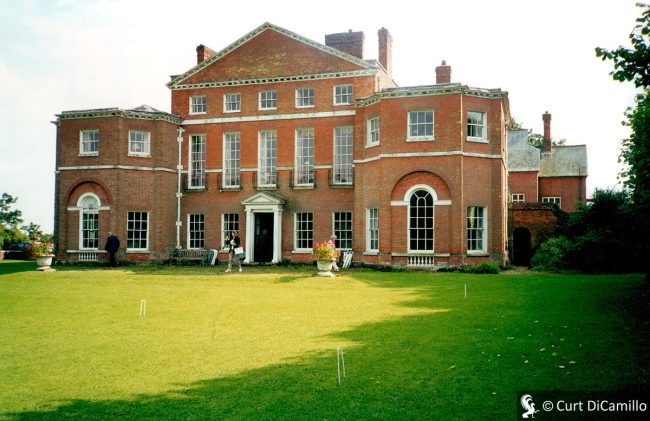
The garden facade in 2002
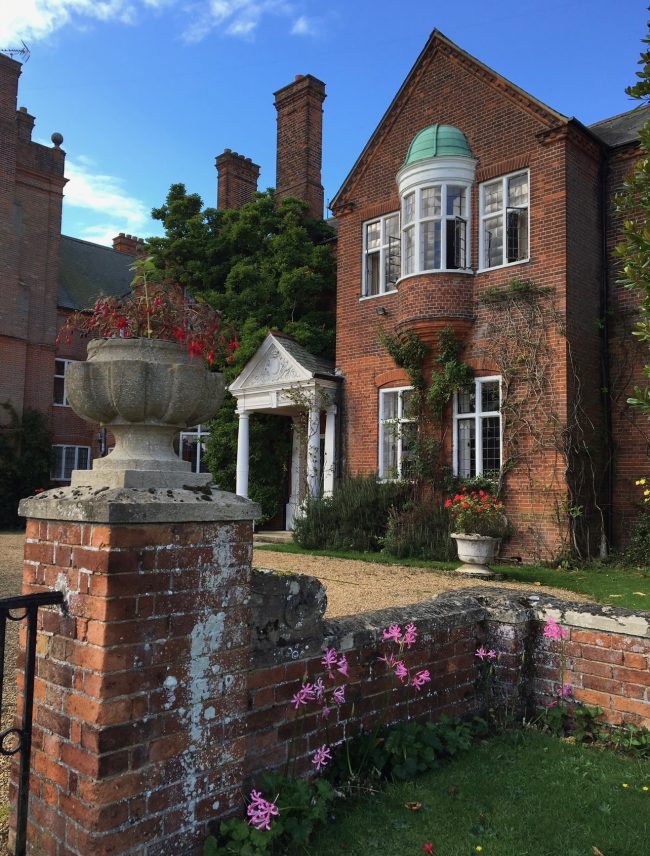
The entrance facade. Photo by kind permission of Brenton Simons.
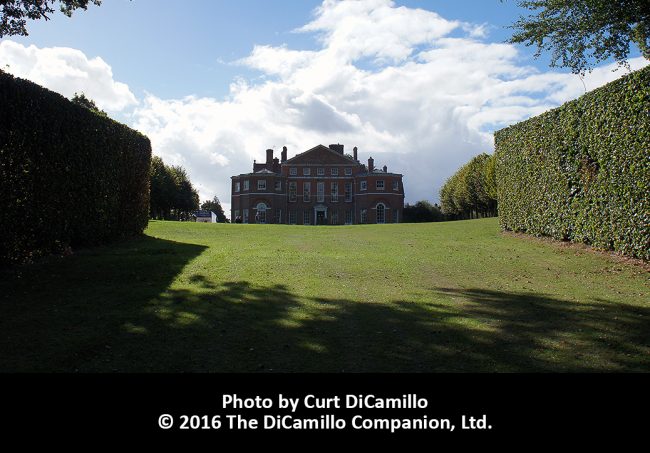
The house from the garden
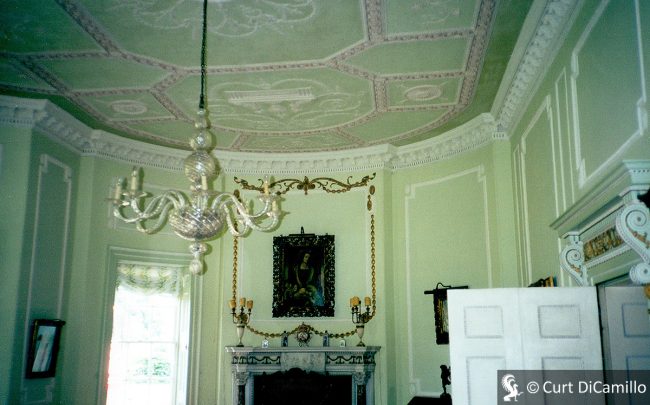
Interior
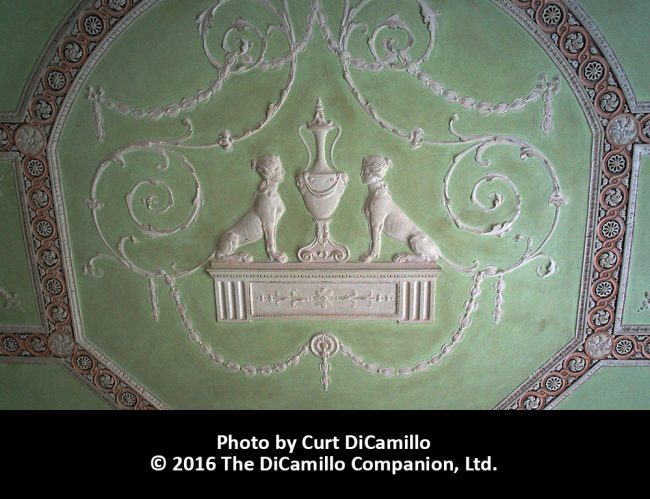
Ceiling plasterwork
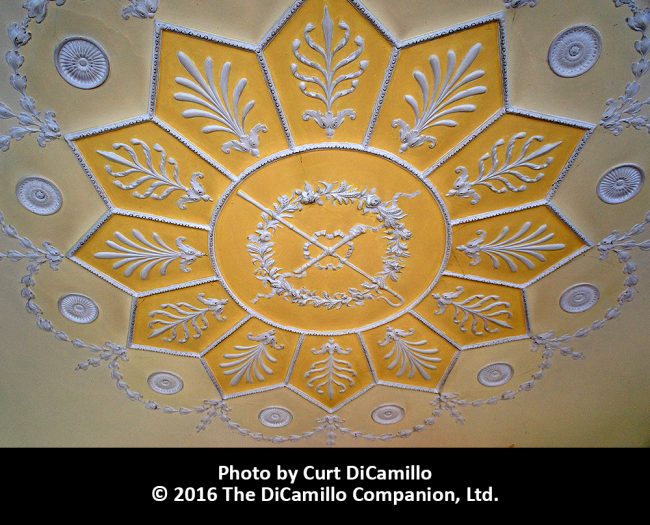
Ceiling plasterwork
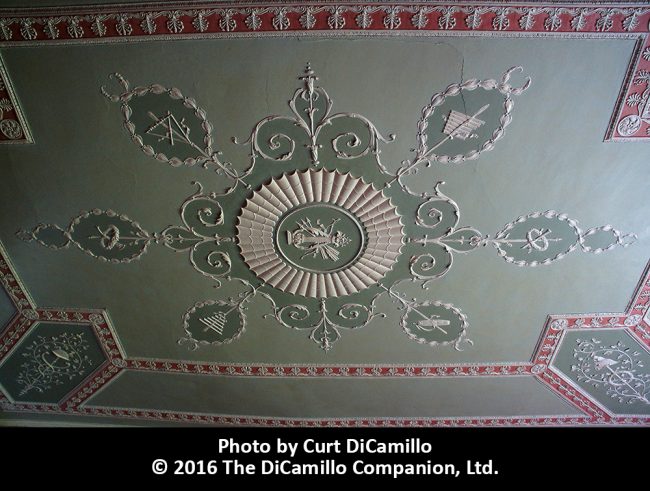
Ceiling plasterwork
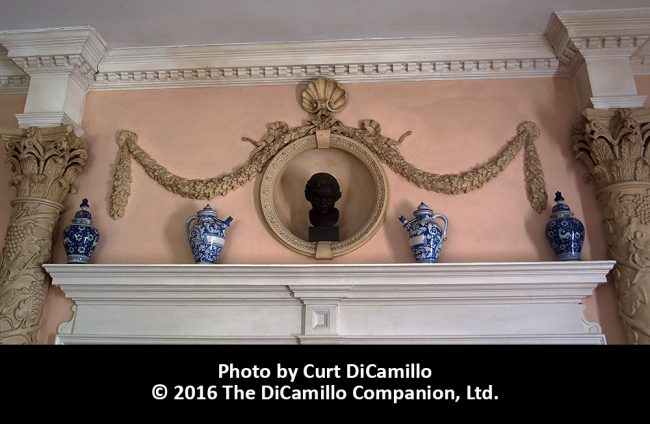
Mantelpiece in the Entrance Hall
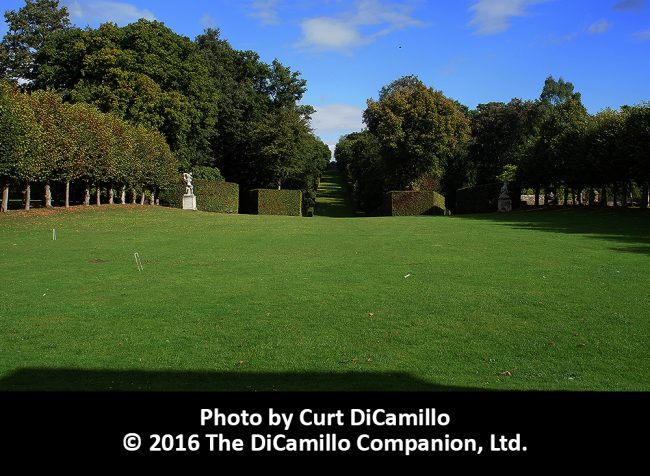
View from the house looking down the main allée
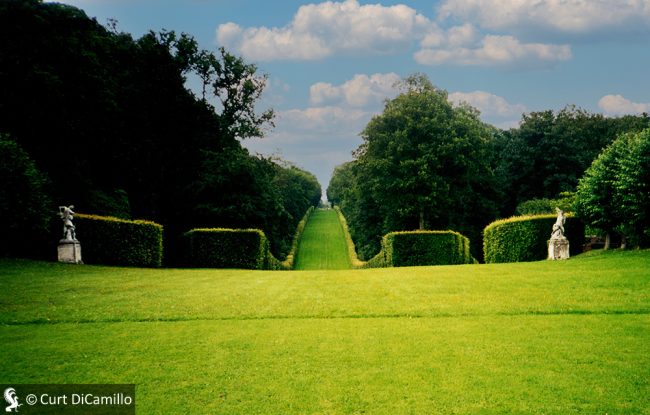
View from the house looking down the main allée
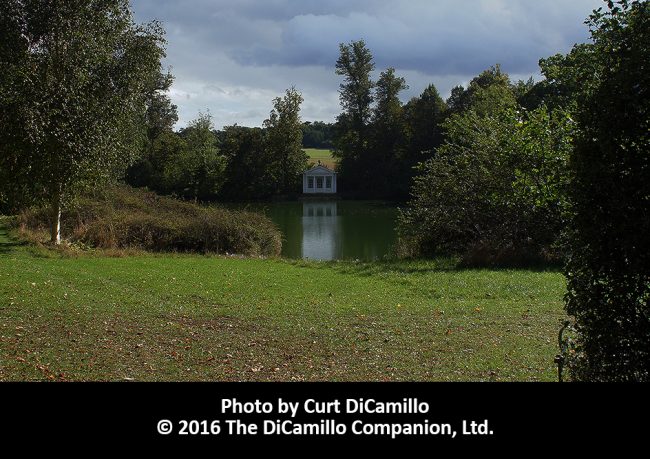
Sir William Chambers's Temple by the Lake from Danson Park
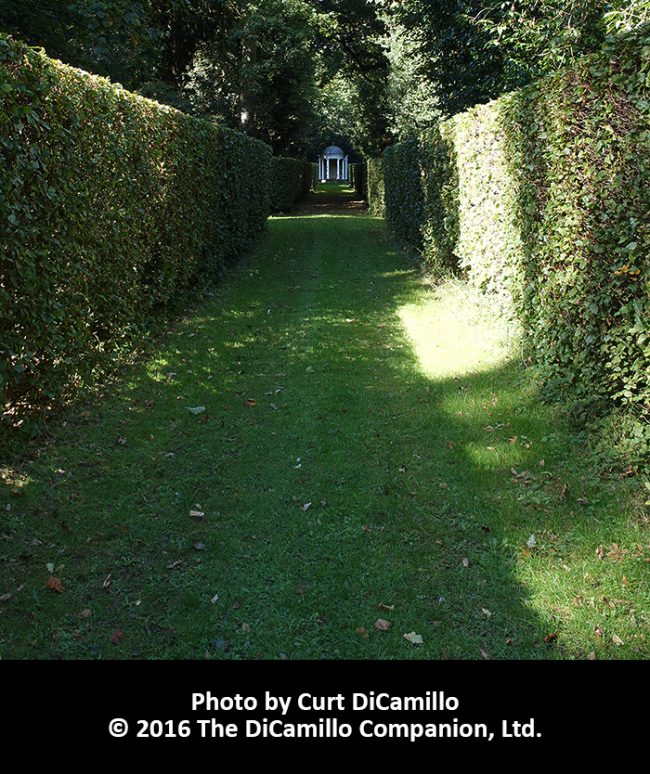
James Wyatt's temple from Copped Hall
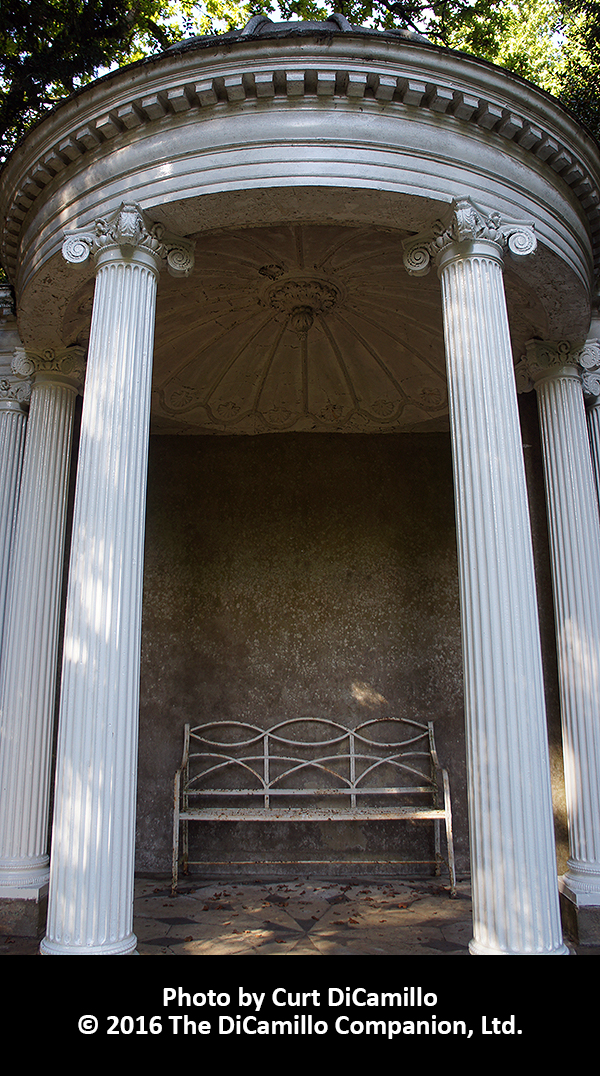
James Wyatt's temple from Copped Hall
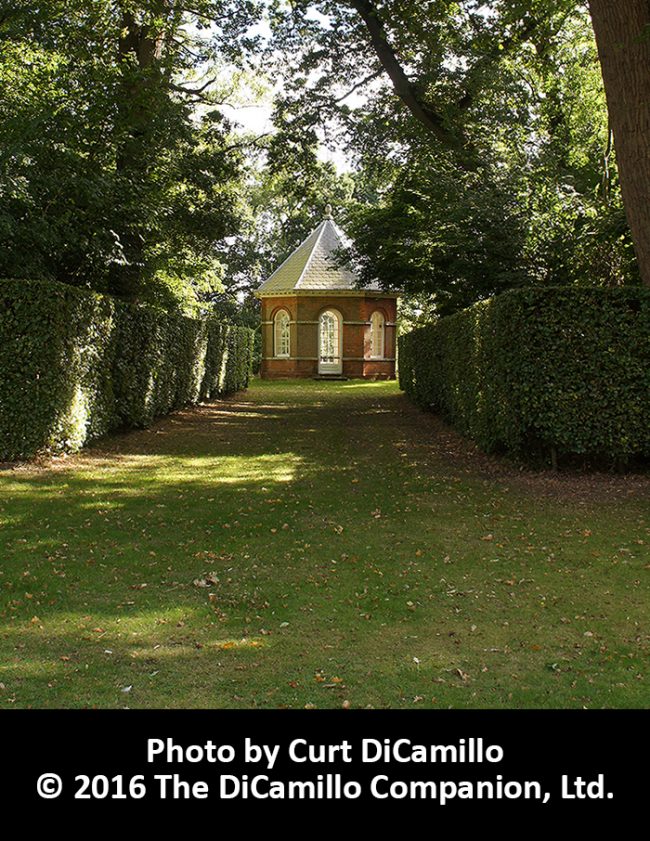
The Organ House
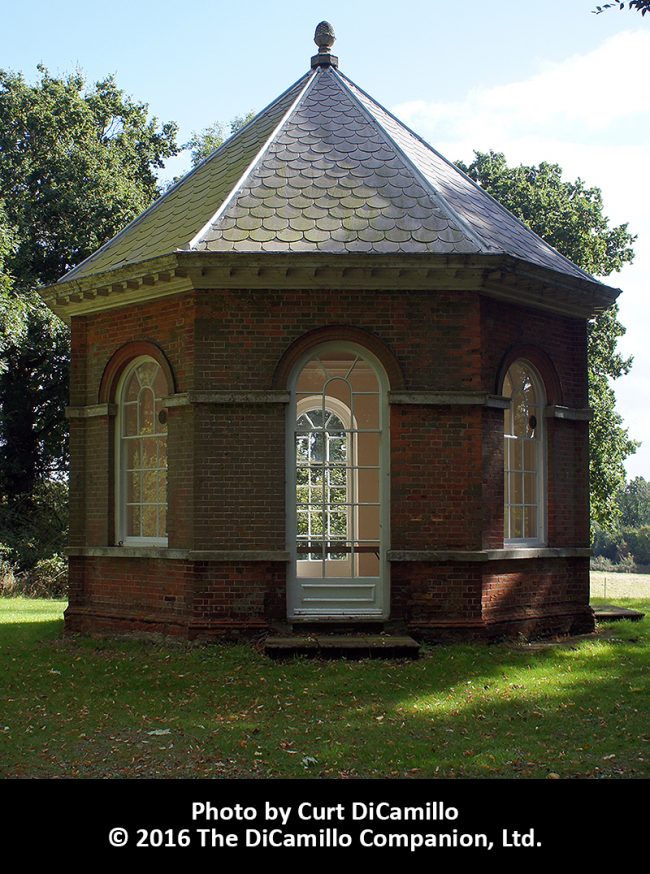
The Organ House
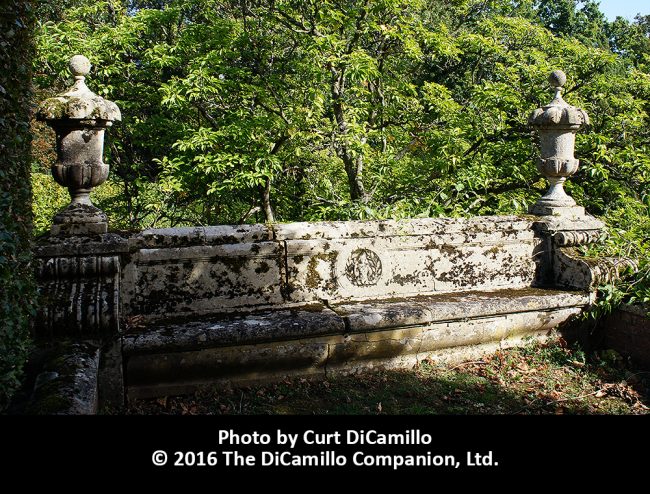
Garden bench
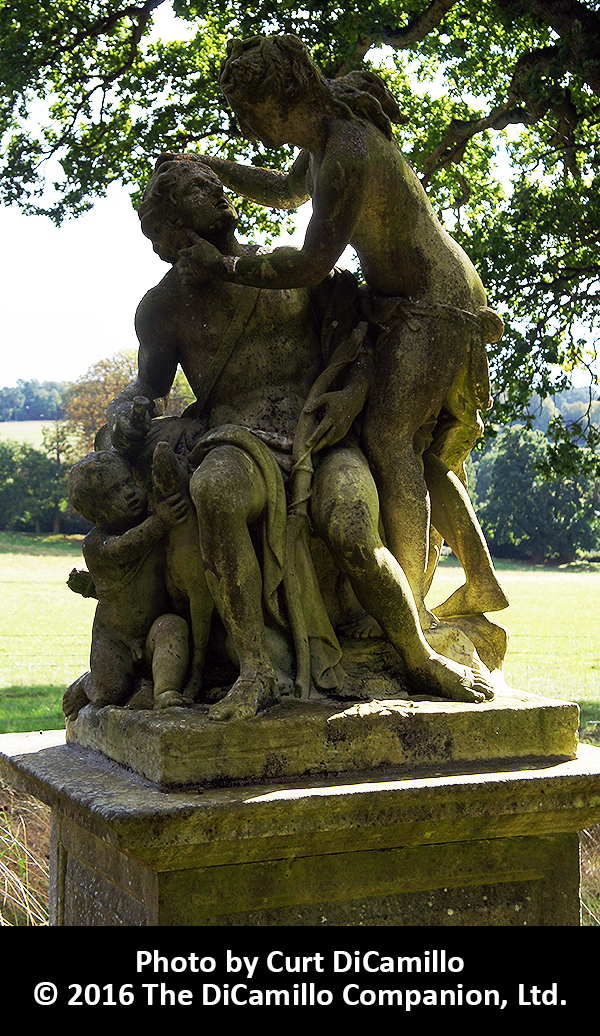
The 18th century statue of Venus and Adonis by Peter Scheemakers
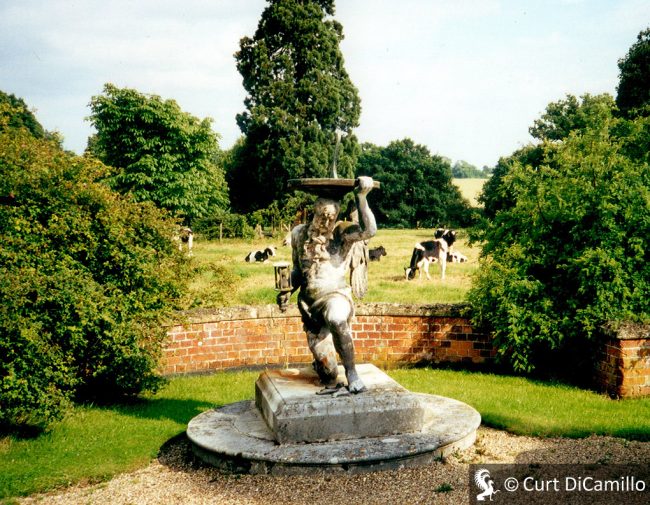
Father Time sundial in the garden
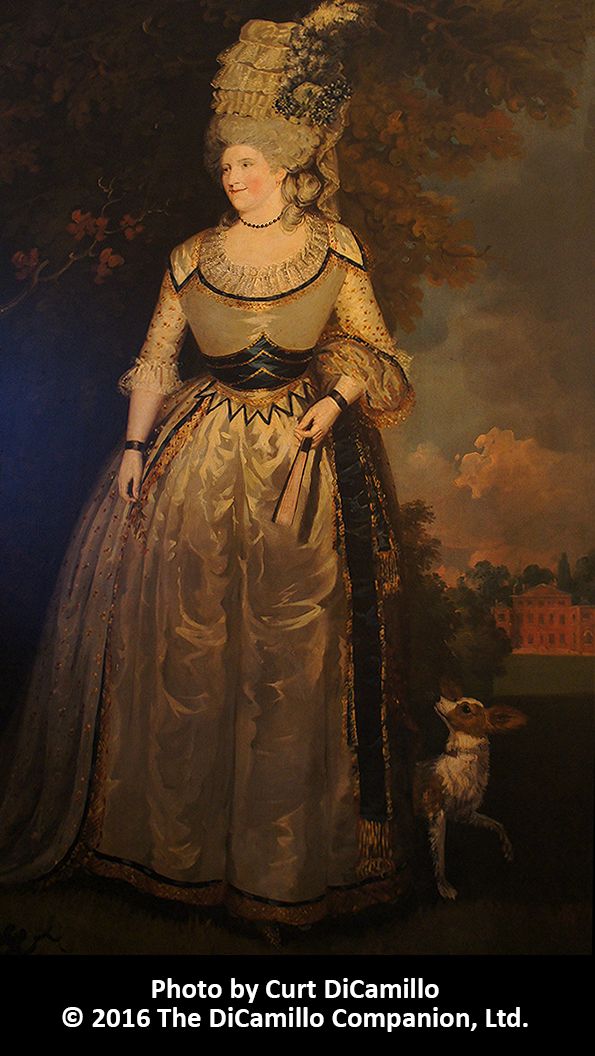
Portrait of Mary Eleanor Bowes in the collection of St. Paul's Walden Bury
Earlier Houses: There were probably a number of earlier monastic buildings on, or near, the site of the current house.
Built / Designed For: Edward Gilbert
House & Family History: For centuries the St. Paul’s Walden Bury Estate belonged to St. Albans Abbey, a wealthy and powerful Benedictine monastery based in the nearby cathedral city of St. Albans. During the Dissolution of the Monasteries the property was confiscated by Henry VIII and subsequently passed into private ownership. In the early 18th century the house that we see today was built for Edward Gilbert, whose only child, Mary, married the very wealthy coal magnate Sir George Bowes (the Bowes and Bowes-Lyon family have been seated here ever since). Mary and Sir George’s daughter and sole heir, Mary Eleanor Bowes, was born in 1749 and became one of wealthiest heiresses in Europe when her father died in 1760. Not surprisingly, the 11-year-old Mary Eleanor was the focus of many potential suitors, all of whom dreamed of acquiring the wealth of the richest woman in Britain. The extremely intelligent and well-educated Mary Eleanor (she could read fluently at the age of four) entertained the attentions of many titled and ordinary suitors before she married the 9th Earl of Strathmore and Kinghorne on her eighteenth birthday in 1767. The couple quickly had five children, after which they drifted apart. The earl died at sea in March of 1776 at the age of 38, probably from tuberculosis, leaving the wealthy Mary Eleanor, once again, a target of fortune hunters (she was now even more attractive because she was a countess). Later referred to as “The Unhappy Countess,” Mary Eleanor is famous for her subsequent romantic entanglement with an Irish solider with a huge gambling problem named Captain Andrew Robinson Stoney. Stoney, desperate to snag the rich widow as his next wife, poured on the charm. During their courtship the countess and Stoney had frequent clandestine romantic meetings at “the Running Footman,” a copy of a classical statue of a gladiator in the grounds of St. Paul’s Walden Bury (the statue still stands today in a glade at St. Paul’s Walden Bury known as the Secret Garden). In December of 1776 scandalous allegations about Mary Eleanor’s personal life began to appear in the pages of “The Morning Post,” a London newspaper edited by Henry Bate. Stoney, horrified by the unseemly suggestions made in the newspaper, challenged Bate to a duel to defend Mary Eleanor’s honor. The duel took place on January 13, 1777, at the Adelphi Tavern on Adam Street in London, where Stoney was mortally wounded. As he lay dying, he told Mary Eleanor that he could not leave this earth a happy man unless he died married to the woman for whom he had given his life. Mary Eleanor granted his wish. He was carried to the altar on a stretcher. After the wedding ceremony Stoney made a miraculous recovery. It rapidly became evident that he was completely unharmed and that the duel had been staged (Stoney very likely had been writing the scandalous suggestions himself, in partnership with his friend Bate). Soon thereafter Stoney’s vicious, violent temper revealed itself when he began his harassment of Mary Eleanor when he discovered that all of her considerable property would not belong to him without his wife’s written consent. Even after Mary Eleanor signed over her remaining assets to Stoney, he maintained a campaign of physical and psychological abuse against his wife. He regularly beat her, imprisoned her in her own house, banned her from seeing her friends and family, opened all her mail, raped her maids, invited prostitutes to live in her house, and fathered so many illegitimate children that an accurate count has never been compiled. When Mary Eleanor was allowed to leave her house, she was followed by Stoney’s spies, who reported every move she made back to her husband. The reason Stoney married Mary Eleanor was to gain control of her assets to pay his enormous gambling debts. He sold huge amounts of Mary Eleanor’s property, even including her collection of rare plants. In desperation, Mary Eleanor did something extraordinarily rare in 18th century England, especially for a woman: she began divorce proceedings against Stoney in 1785 on the grounds of cruelty. In spite of Stoney’s threats to rape and kill her, Mary Eleanor stood firm and refused to drop the divorce proceedings. If the divorce was successful, Stoney would lose access to all of Mary Eleanor’s assets, something he could not allow to happen. So, on November 10, 1786, when she set off to visit friends, Stoney’s hoodlums kidnapped Mary Eleanor on Oxford Street in London in her own coach. As the hijacked coach sped north, with Mary Eleanor’s friends in pursuit, Stoney held a pistol to her head, threatening to kill her unless she stopped the divorce proceedings. Mary Eleanor refused. During the eight-day journey that followed, Mary Eleanor was gagged, threatened, and repeatedly beaten. During the nightmarish ordeal she lost most of her clothing, was exposed to freezing temperatures, deprived of sleep, and starved almost to the point of delirium. As their pursuers closed in, Stoney forced Mary Eleanor to abandon the coach and ride pillion on the horse of one of his thugs; finally, he forced her to trudge through the fields wearing only one shoe. When she was rescued by brave farmhands in a village near Darlington in County Durham, Mary Eleanor, covered in mud and bruises and severely affected by exposure, was unable to walk. Back in London, she had to be carried into court to swear articles of peace against Stoney. After eight long years of unimaginable misery, Mary Eleanor was finally able to divorce Stoney, who must be counted among history’s most wicked husbands. Mary Eleanor did not remarry and lived the rest of her life quietly in a country house near Portsmouth. She died on April 28, 1800, at the age of 51 and was buried, at her request, in Poets’ Corner of Westminster Abbey. Stoney outlived Mary Eleanor by almost 10 years. He died insolvent on January 6, 1810, in the Rules of the King’s Bench Prison in Southwark, London, where he had been a prisoner for the last 22 years. At the time, the story of Mary Eleanor’s treatment, kidnapping, and subsequent escape was front page news around the world. But, as with most scandals, the story died down and had almost disappeared from the public consciousness by the mid-19th century. It was around this time, 1841, to be precise, that John Bowes, the illegitimate son of Mary Eleanor’s eldest son, the 10th Earl of Strathmore, invited his friend, the young writer William Makepeace Thackeray, to stay at Streatlam Castle in County Durham, one of the Bowes-Lyon family’s other homes. During the visit John Bowes told Thackeray the sensational life story of his grandmother. So captivated was the young author by Mary Eleanor that he became determined to write a book that would tell her story as a work of fiction. The result was Thackeray’s 1844 novel, “The Luck of Barry Lyndon,” which Stanley Kubrick turned into the award-winning 1975 film “Barry Lyndon.” Mary Eleanor was an amazing woman in many respects, not least as a keen botanist. She formed important collections of plants at St. Paul’s Walden Bury in Hertfordshire; Gibside Hall in County Durham; and Stanley House in London, which was located close to the famous Chelsea Physick Garden. At St. Paul’s Walden Bury Mary Eleanor organized gatherings of prominent flower painters of her day, started a collection of botanical books (some of which are still in the house), and, in 1777, financed an expedition by the Scottish soldier, explorer, and botanist Col. William Paterson to South Africa to collect exotic plants. Mary Eleanor’s full story is told in Wendy Moore’s 2009 book, “Wedlock: The True Story of the Disastrous Marriage and Remarkable Divorce of Mary Eleanor Bowes, Countess of Strathmore.” It’s from this outstanding book that we have the perfect summary of Mary Eleanor’s gift to women’s rights: “At a time when women enjoyed pitifully few rights in law, either in marriage or in general, Mary Eleanor Bowes won an unprecedented series of victories, amounting to a remarkable triumph, that would stand as a beacon of hope to inspire writers and encourage campaigners in the continuing battle for reform.” During World War II the house was used as a hospital. St. Paul's Walden Bury was a childhood home of Queen Elizabeth The Queen Mother.
Garden & Outbuildings: The garden is one of the best extant examples in the UK of a formal garden in the French style. Laid out about 1730, it was influenced by 17th century French architects such as Le Notre (who designed the gardens of Versailles for Louis XIV) and is based on the classic patte d'oie (goose foot) design, in which avenues radiate from a focal point. Long avenues lead to temples, an artificial lake (created when the property belonged to St. Albans Abbey), and ponds. The garden comprises approximately 40 acres and includes a woodland garden, flower gardens, a terraced garden with a small temple, a ruin of a small brick orangery, and The Organ House, an octagonal pavilion from 1735. The garden has a fine collection of statuary, including a pair known as "The Wrestlers," possibly sculptured by John Nost, circa 1730; on the right is a copy of Michelangelo's "Sampson and Two Philistines," while on the left is a copy of Giambologna's "Hercules and Antaeus." The 18th century statue of Diana is an identical version of one that is in the collection of the Louvre. From Copped Hall are statues of sphinxes, said to be portraits of the mistresses of Louis XV. The 18th century statue of Venus and Adonis by Peter Scheemakers was installed in the garden in 1964; a companion piece by Laurent Delvaux is in the collection of the Victoria and Albert Museum. There is also a formal pond with a copy of a classical warrior known as "The Running Footman" (where Mary Eleanor clandestinely met Captain Andrew Robinson Stoney). St. Paul's Walden Bury has two temples removed from other country houses and saved here: one by Sir William Chambers that was removed to St. Paul's Walden Bury in 1961 from Danson Park, Kent; and one designed by James Wyatt, which was removed in 1950 from Copped Hall, Essex (see "Images" section for photos of both temples). Mary Eleanor purchased Stanley House (later the home of Sir William Hamilton) near the Chelsea Physic Garden in London, where she built greenhouses and conservatories to house her exotic plants.
Architect: Arthur Castings
Date: 1910-15Architect: Geoffrey Alan Jellicoe
Date: 1950Architect: William Oldham Chambers
Date: Circa 1770Architect: James Wyatt
Date: 18th centuryArchitect: Robert Adam
Date: 1767Architect: James Paine Sr.
Date: 1767Country Life: CXIX, 472, 1956.
Title: Wedlock: The True Story of the Disastrous Marriage and Remarkable Divorce of Mary Eleanor Bowes, Countess of Strathmore
Author: Moore, Wendy
Year Published: 2009
Reference: pgs. 61, 65, 68-69, 76, 92, 95, 109, 113, 117-120, 123, 125, 130-131, 133, 257-260, 263, 266, 271-274, 289, 312, 320-321, 323-324
Publisher: New York: Crown Publishers
ISBN: 9780307383365
Book Type: Hardback
Title: English Houses, 1200-1800: The Hertfordshire Evidence
Author: Smith, J.T.
Year Published: 1992
Reference: pg. 123
Publisher: London: Her Majesty's Stationery Office
ISBN: 0113000375
Book Type: Softback
Title: Biographical Dictionary of British Architects, 1600-1840, A - HARDBACK
Author: Colvin, Howard
Year Published: 2008
Reference: pgs. 243, 771
Publisher: New Haven: Yale University Press
ISBN: 9780300125085
Book Type: Hardback
Title: English Gardens in the Twentieth Century From the Archives of Country Life
Author: Richardson, Tim
Year Published: 2005
Reference: pg. 152
Publisher: London: Aurum Press
ISBN: 1845130715
Book Type: Hardback
Title: Gibside Guidebook
Author: NA
Year Published: 1999
Reference: pgs. 28-29
Publisher: London: The National Trust
ISBN: NA
Book Type: Light Softback
Title: Gardens - St. Paul's Walden Bury, The
Author: NA
Year Published: 1998
Reference: pgs. 3-9, 14
Publisher: NA
ISBN: NA
Book Type: Light Softback
Title: James Paine
Author: Leach, Peter
Year Published: 1988
Reference: pg. 207
Publisher: London: A. Zwemmer Ltd.
ISBN: 0302006028
Book Type: Hardback
House Listed: Grade I
Park Listed: Grade I
Current Seat / Home of: Sir Simon and Lady Bowes-Lyon
Past Seat / Home of: Edward Gilbert, until 1762. Mary Eleanor Bowes, Countess of Strathmore, 18th century; John Lyon-Bowes, 10th Earl of Strathmore and Kinghorne, 1776-1820; Thomas Lyon-Bowes, 11th Earl of Strathmore and Kinghorne, 1820-46; Thomas Lyon-Bowes, 12th Earl of Strathmore and Kinghorne, 1846-65; Claude Bowes-Lyon, 13th Earl of Strathmore and Kinghorne, 1865-1904; Claude George Bowes-Lyon, 14th and 1st Earl of Strathmore and Kinghorne, 1904-44; Patrick Bowes-Lyon, 15th and 2nd Earl of Strathmore and Kinghorne, 1944-49; Timothy Bowes-Lyon, 16th and 3rd Earl of Strathmore and Kinghorne, 1949-72.
Current Ownership Type: Individual / Family Trust
Primary Current Ownership Use: Private Home
House Open to Public: Limited Access
Phone: 01438-871-218
Email: [email protected]
Website: https://www.stpaulswaldenbury.co.uk/
Historic Houses Member: No