

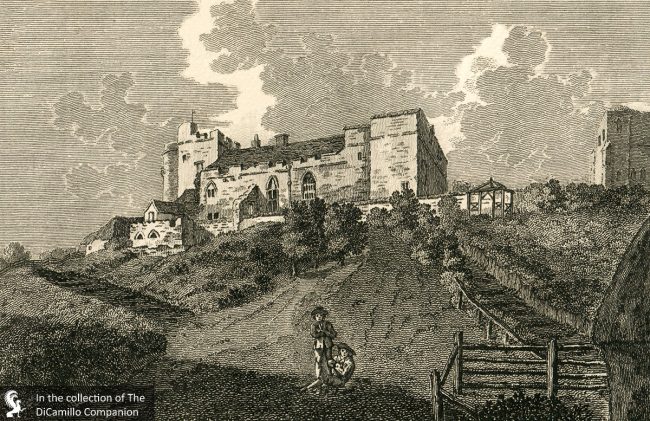
A 1784 copperplate engraving of the castle from "The Antiquities of England and Wales"
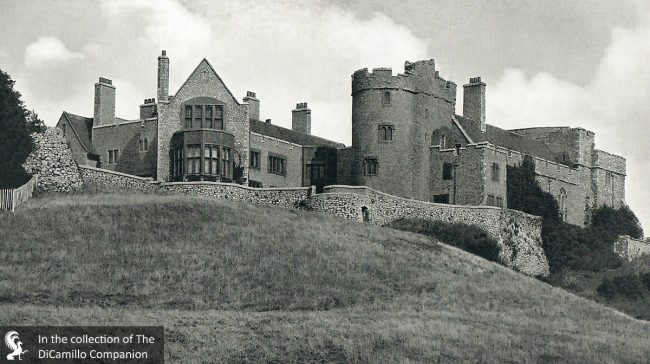
The house from a 1910 photograph
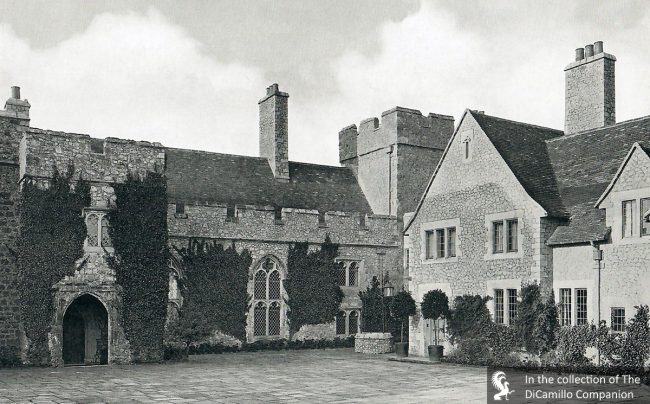
The courtyard from a 1910 photograph
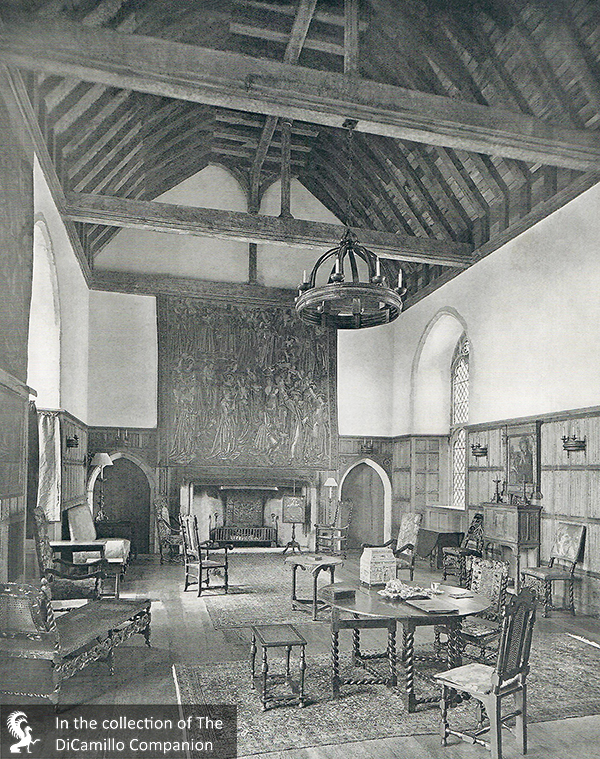
The Great Hall from a 1910 photograph
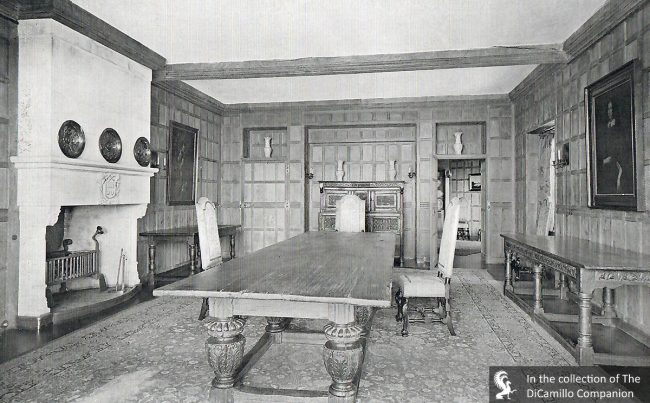
The new dining room from a 1910 photograph
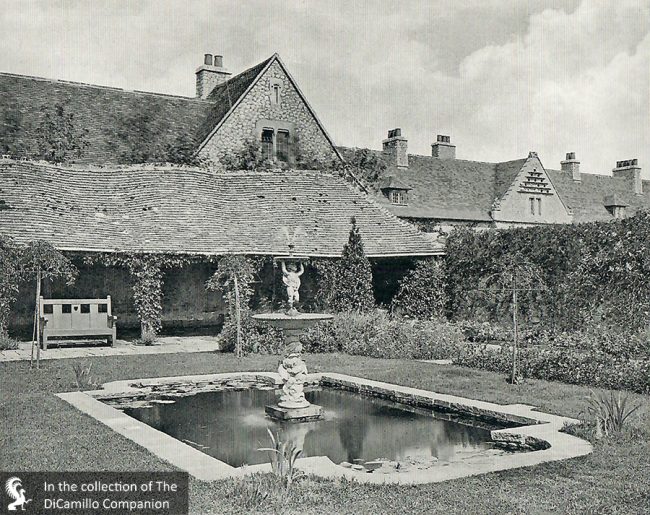
The Rose Garden from a 1910 photograph
House & Family History: Lympne Castle, probably erected in the 12th century, was built by the Catholic Church as a residence for the archdeacons of nearby Canterbury, a purpose the castle served for centuries. Constructed on the site of the medieval Lympne Abbey, the castle overlooks the ruins of the 2nd or 3rd century AD Roman shore fort of Portus Lemanis, from which the word Lympne is almost certainly derived. One of the major entry points into Britain, Portus Lemanis was used by the Roman fleet as a naval base for Classis Britannica (“the fleet of the province of Britannia”) until the port silted up, probably around the 4th century (tiles stamped “CL BR” have been found in the area, which suggests that sailors of the fleet were involved in the construction of the fort). Altered and added to many times over the years, Lympne Castle remained the property of the Church of England until 1860, when it was sold into private ownership and became a farmhouse. During the 19th and early 20th century the castle became increasingly neglected; by 1904 the near ruinous building was being used for agricultural storage. In 1905 Lympne Castle was purchased by Francis John Tennant, who hired the noted Scottish architect Robert Stodart Lorimer to enlarge, restore, and convert the medieval castle into a modern private home. During World War I the house served as barracks for members of the Royal Flying Corps based at the nearby Lympne Airfield and, later in the war, as a convalescent home for wounded Canadian soldiers. Because of its elevated position on a chalk escarpment, the castle commands exceptional views over the English Channel, which is why it became a British Army lookout station during World War II. But, of course, you’re reading this because of Paul McCartney, who, in September of 1978, recorded Wings’s seventh and final studio album, 1979’s "Back to the Egg," at Lympne Castle. In February of 2023 Lympne Castle was sold for £5.5 million to Stephen and Ann Mulholland, a Canadian couple who spent millions restoring the castle, which they opened as a wedding and event venue. A final footnote to this story is the 2025 Canadian reality docuseries "Queen of the Castle," which follows the Mulhollands as they restore and open the castle to the public.
Architect: Robert Stodart Lorimer
Date: 1907-12Country Life: XXVIII, 682 plan, 1910.
Title: Country Life (magazine)
Author: NA
Year Published: NA
Reference: Nov 12, 1910 issue, pg. 682,
Publisher: Bath: Future plc
ISBN: NA
Book Type: Magazine
House Listed: Grade I
Park Listed: Not Listed
Current Seat / Home of: Stephen and Ann Mulholland; here since 2023.
Past Seat / Home of: SEATED AT CURRENT HOUSE: Major Lawes, 19th century. Francis John Tennant, 1905-18. Henry Beecham, 1918-?
Current Ownership Type: Individual / Family Trust
Primary Current Ownership Use: Event Venue
House Open to Public: By Appointment
Phone: 01303-533-533
Email: [email protected]
Website: https://lympnecastle.com/
Historic Houses Member: No